


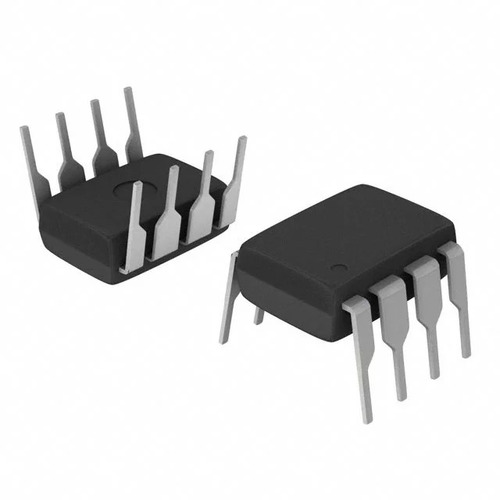
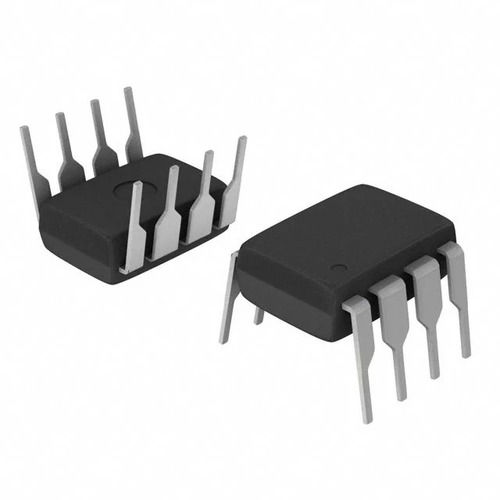
SSM2143P
100 INR
Product Details:
- Input Differential Signal Inputs
- Power Source Electronic Circuit Supply
- Interface Standard DIP pins
- Output Single-Ended Voltage Output
- Power Supply Dual Supply
- Response Time Fast Slew Rate: 4V/s
- Usage Professional Audio Equipment, Instrumentation
- Click to View more
X
SSM2143P Price And Quantity
- 100 INR
- 20 Piece
- 20nA (Typ)
- 1
- Compliant
- 250V (Typ)
- 0.0006% (Typ)
- Through Hole
- 3MHz
- 86dB (Typ) at 60Hz
- 1.5V rms (20Hz to 20kHz)
- 8-Pin Plastic DIP (PDIP)
- 2.54mm
SSM2143P Product Specifications
- 5V to 18V
- Precision Differential Line Receiver
- Standard 8-DIP (Dual Inline Package)
- Single-Ended Voltage Output
- Standard DIP pins
- Differential Signal Inputs
- Electronic Circuit Supply
- Standard DIP package
- Black (Standard IC package color)
- Audio Bandwidth
- Approx. 0.5g
- Professional Audio Equipment, Instrumentation
- 15V
- Dual Supply
- Fast Slew Rate: 4V/s
- Integrated Circuit
- 9.27mm x 6.35mm (body), Height ~5mm
- -40C to +85C
- Not Rated
- Standard for DIP ICs
- Audio Signal Processing, Balanced to Unbalanced Conversion
- High CMRR, Low Noise, Low Distortion
- 10mA (Typical)
- Monolithic IC
- 20nA (Typ)
- 1
- Compliant
- 250V (Typ)
- 0.0006% (Typ)
- Through Hole
- 3MHz
- 86dB (Typ) at 60Hz
- 1.5V rms (20Hz to 20kHz)
- 8-Pin Plastic DIP (PDIP)
- 2.54mm
SSM2143P Trade Information
- All India
Product Description
Specification
| Bandwidth | 7 MHz |
| Number of Pins | 8 |
| Length | 9.27 mm |
| Width | 7.24 mm |
| Power Supply Rejection Ratio PSRR | 90 dB |
| Number of Elements | 1 |
| Mount | Through Hole |
| Min Supply Voltage | 6 V |
| Min Operating Temperature | -40 deg C |
| Min Dual Supply Voltage | 6 V |
| Max Supply Voltage | 18 V |
| Max Supply Current | 4 mA |
| Max Operating Temperature | 85 deg C |
| Max Dual Supply Voltage | 18 V |
| Input Resistance | 18 k |
| Input Offset Voltage Vos | 1.2 mV |
| Height | 3.43 mm |
| Dual Supply Voltage | 15 V |
| Common Mode Rejection Ratio | 70 dB |
| Case Package | PDIP |
Outstanding Noise Performance for Professional Audio
Engineered for audio excellence, the SSM2143P offers ultra-low noise of 1.5V rms (20Hz-20kHz), making it perfect for studios and instrumentation systems where signal integrity is crucial. With total harmonic distortion plus noise (THD+N) as low as 0.0006% and a 3MHz gain bandwidth product, it ensures faithful signal reproduction with minimal artifacts, meeting the demanding needs of audio professionals.
Reliable and Versatile Mounting Options
Featuring an 8-pin Plastic DIP (PDIP) package with a 2.54mm lead pitch, the SSM2143P supports standard through-hole mounting, allowing for easy integration into both legacy and modern electronic assemblies. Its RoHS-compliant, black monolithic IC body ensures environmental safety and compatibility with industry-standard PCB designs.
Precision Conversion for Balanced and Unbalanced Signals
As a single-channel, high-precision differential line receiver, the SSM2143P effectively converts balanced differential signals to single-ended outputs. Its high CMRR (86dB typical) helps reject common-mode noise, making it highly suited for long cable runs in professional audio, balanced-to-unbalanced signal interfacing, and instrumentation circuits.
FAQs of SSM2143P:
Q: How does the SSM2143P achieve high Common Mode Rejection Ratio (CMRR) in professional audio applications?
A: The SSM2143P delivers a high CMRR of 86dB at 60Hz by balancing the internal circuit architecture and precision-matched components. This design enables excellent rejection of unwanted common-mode signals, making it ideal for audio applications where long cable runs may introduce external noise.Q: What types of signals can be processed by the SSM2143P, and what are its main output capabilities?
A: The SSM2143P is optimized for differential signal inputs, typically encountered in balanced audio lines. It outputs a clean, single-ended voltage, making it effective for converting professional audio or instrumentation signals into a format suitable for further processing or amplification.Q: When should I consider using the SSM2143P in my circuit design?
A: Consider using the SSM2143P when your application demands high fidelity, low distortion, and effective noise rejectionsuch as in audio signal processing, analog front-ends for measurement instruments, or wherever balanced-to-unbalanced conversion is needed.Q: Where is the SSM2143P commonly used in India and what industries benefit from it?
A: The SSM2143P is widely available through distributors, importers, manufacturers, suppliers, traders, and wholesalers across India. It serves industries such as professional audio equipment, studio and broadcasting, measurement instrumentation, and high-performance analog systems.Q: What is the process for mounting and integrating the SSM2143P into an existing design?
A: Thanks to its standard 8-pin Plastic DIP (2.54mm pitch) package, the SSM2143P can be easily mounted onto through-hole PCBs. Simply insert the IC into the corresponding socket or plated holes, ensuring correct orientation, and solder in place according to standard electronic assembly practices.Q: How does the SSM2143P benefit audio signal processing and equipment performance?
A: By offering low noise, minimal distortion, and fast slew rates, the SSM2143P preserves the integrity of analog audio signals. Its outstanding CMRR further ensures that hum and interference are effectively rejected, resulting in clearer, more accurate sound reproduction and measurement readings.Tell us about your requirement

Price:
Quantity
Select Unit
- 50
- 100
- 200
- 250
- 500
- 1000+
Additional detail
Mobile number
Email

Other Products in 'Analog Devices IC' category




Contact Details
KK INTERNATIONAL
Mumbai, Maharashtra, India
Mumbai, Maharashtra, India

- Plot No. 305, Rajdeep Apartments, Tara Temple Lane, Near Lamington Road,Mumbai - 400007, Maharashtra, India
- Phone : 08045477473
- Mr Pratik Chouhan (Managing Director)
- Mobile : 08045477473
-
 Send Inquiry
 Send Inquiry
 Send Inquiry
 Send SMS
Quick Inquiry

 |
KK INTERNATIONAL
All Rights Reserved.(Terms of Use) Developed and Managed by Infocom Network Private Limited. |
